
Building Hurricane-Ready Elegance in the Cape
A New Concrete Tile Roof in Palmetto Pointe, Cape Coral
Here in Southwest Florida, a home is only as safe as the roof over it. When Paul and Sheri were planning the roof for their new build on Palmetto Pointe Circle, they had one goal in mind: something that looked as good as it performed, with zero shortcuts on materials, fastening, or ventilation.
They brought that goal to McKinnis Roofing & Sheet Metal, and asked us to build it right the first time.
Choosing the Right Tile: Newpoint Saxony 900
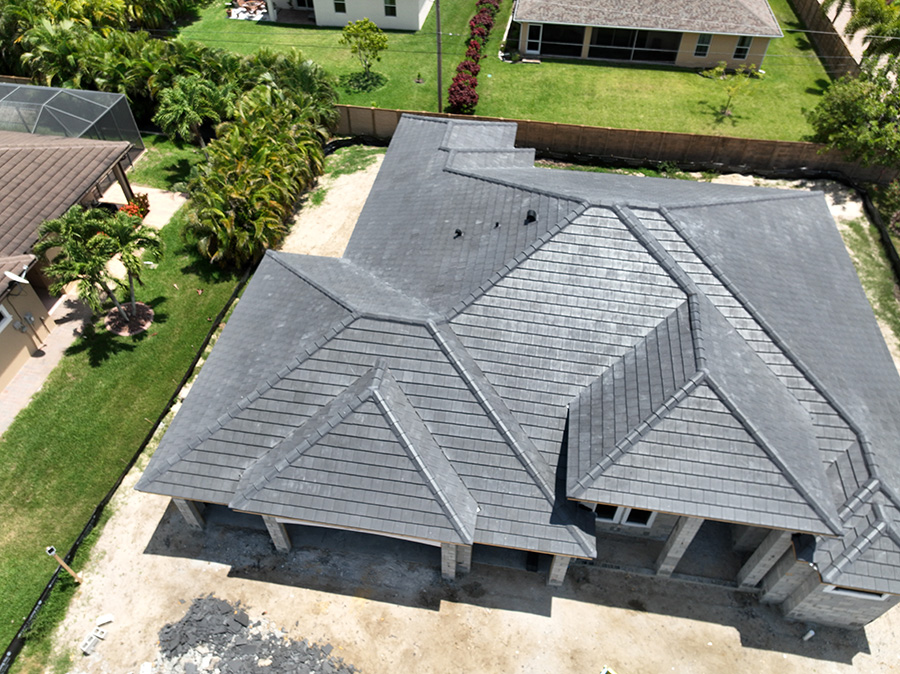
Homes on the coast in Cape Coral deal with a lot — brutal sun, daily downpours, and whatever the wind kicks up off the Gulf. For a roof that could handle all of that and still look great doing it, we went with the Newpoint Saxony 900 pre-dyed concrete tile from Westlake Royal Roofing Products. It's a flat-profile tile with the clean, timeless look of slate, but with the structural weight to stand up to impact and Florida's constant heating and cooling cycles.
What Happens Before the Tile Ever Goes Down
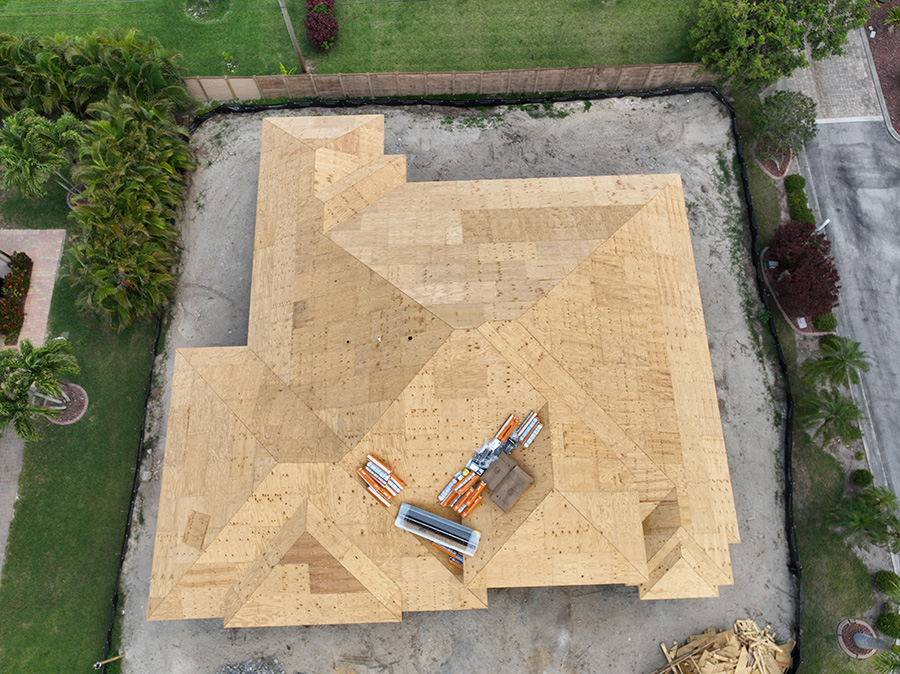
Here's the thing about roofs: the part that actually keeps water out is the part you never see again once the tiles are on. So before we laid a single tile, our crew focused on building a water barrier that wouldn't quit.
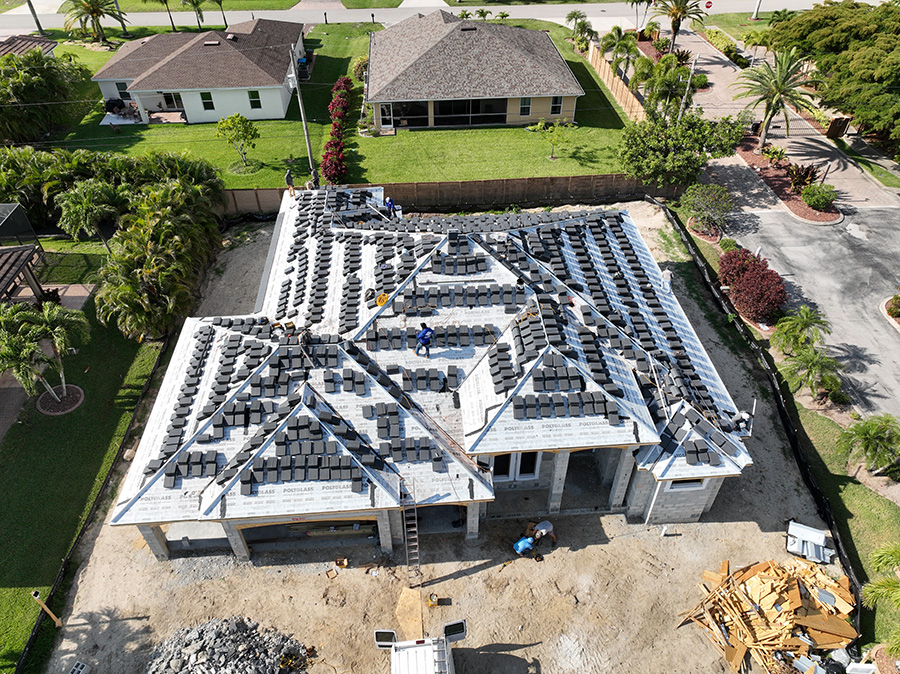
- High-heat underlayment across the whole roof. Over a clean, dry, properly fastened deck, we installed Westlake Royal Tile Seal HT — a self-adhering underlayment built specifically to handle the extreme heat that builds up under concrete tile. It seals tightly around every penetration and creates a continuous secondary water barrier for the whole roof.
- Proper valley drainage. At every roof junction, we installed heavy-gauge W-Valley metal flashing, integrated and sealed with the underlayment so heavy rain gets channeled away instead of pooling where two slopes meet.
- Two ways to hold every tile down. Lee County has strict wind-design requirements, and for good reason. We screwed every tile into place per local wind mitigation specs, then paired that with Dow Titebond foam adhesive underneath. Screws plus foam means the tiles are anchored two different ways against hurricane-force uplift, not just one.
- Bird stops and clean mortar work. We installed custom-fitted bird stops along every eave, matched to the Saxony tile profile, to keep pests out and driving rain from sneaking up under the first row of tiles. All the hips, ridges, and rakes were bedded and finished with Westlake Royal Tile Mortar for clean, tight lines.
- Ventilation and sealants that go the distance. We added 4-foot tile vents across the main roof planes to keep air moving through the attic and ease the load on the AC. Every flashing and transition point was sealed with Polyglass Polystick Poli+500 for a lasting, flexible waterproof bond.
Honest Communication, Start to Finish
One thing came up early that we made sure to flag before it became a surprise: the home's gutters had hidden fasteners, and installing the new drip edge required by code meant removing and reinstalling those fasteners. We walked Paul through exactly what that meant and any cosmetic risk involved, well before it showed up on the invoice.
Throughout the build, our crew kept the jobsite clean and organized, with daily cleanups and magnetic sweeps so the driveway and yard stayed nail-free. Backed by our 5-year workmanship warranty, the Delisle home now has a roof built to protect their family for decades to come.
Frequently Asked Questions
Why does concrete tile need high-temperature peel-and-stick underlayment?
Concrete tile soaks up and holds onto heat, and temperatures between the tile and the deck underneath can easily climb past 150°F in the Florida sun. Regular felt underlayment breaks down fast under that kind of heat. A high-temp membrane like Westlake Royal Tile Seal is built with polymer-modified asphalt that resists that breakdown, seals itself around screw holes, and still keeps water out even if a tile cracks down the road.
Why use both screws and foam adhesive to install tile?
The screws give you the structural, code-required attachment straight into the deck. The foam adhesive cushions each tile and bonds it to the underlayment underneath. Together, they stop the tiles from shifting or chattering in high wind, which makes a real difference for wind uplift ratings here on the coast, and it also keeps stress from concentrating on any one tile.
Why do tile roofs need bird stops at the eaves?
Tile has a contoured or raised shape, which naturally leaves small gaps along the bottom edge of the roof. Bird stops close those gaps. They keep birds, bats, and rodents from nesting under your tiles, stop wind-driven rain from getting up under that first row, and help keep the bottom course of tiles sitting at the right angle.
Can a new tile roof actually lower my homeowners insurance in Cape Coral?
It can. A newly permitted concrete tile roof can qualify for several discounts on Florida's Wind Mitigation Inspection Form. Things like a secondary water barrier, modern nail and screw attachment patterns, and wind-rated, Florida-approved tiles all tell your insurance underwriter that your home is well protected against wind and water damage — and that usually translates into real savings on your policy.
How do you protect existing gutters during a tile roof install?
Installing new drip edge to meet current code means working right above the gutter line. If your gutters use hidden-fastener brackets, those brackets have to come off and go back on to slide the new drip edge metal into place. A contractor who does this right will walk you through that step ahead of time, protect your gutters during the work, and make sure every bracket is properly reattached once the detailing is done.
Visit our main Florida page
Visit our Fort Myers page
Location Information
- Address: 12701 Metro Pkwy B, Fort Myers, FL 33966
- Local Phone: (239) 426-8928
- Office Hours: Monday - Friday: 8am - 5pm • Closed Sat & Sun