
Tile Roof Valley Leak Repair in Brantley Oaks – Fort Myers, FL
Doing the Job Right the First Time
If you live in Fort Myers, you know the drill: gorgeous sunshine most of the year, then a summer storm season that seems to find every weak spot in your roof within about ten minutes. That's exactly what happened to Tristan, a homeowner in the Brantley Oaks community in Fort Myers. He had a stubborn leak around a tricky "dead valley" on his concrete tile roof, and no matter what he tried, it kept coming back.
And Tristan had tried. Three different roofing contractors came out before he called us. Each one looked things over, said they'd fixed it, and left behind a smear of roofing cement or caulk over the trouble spot. It held up right until the next big storm rolled in, and then the water found its way back in every time. By the time he reached out to McKinnis Roofing & Sheet Metal, he was understandably frustrated and more than a little skeptical that anyone could actually fix it.
Getting to the Real Problem
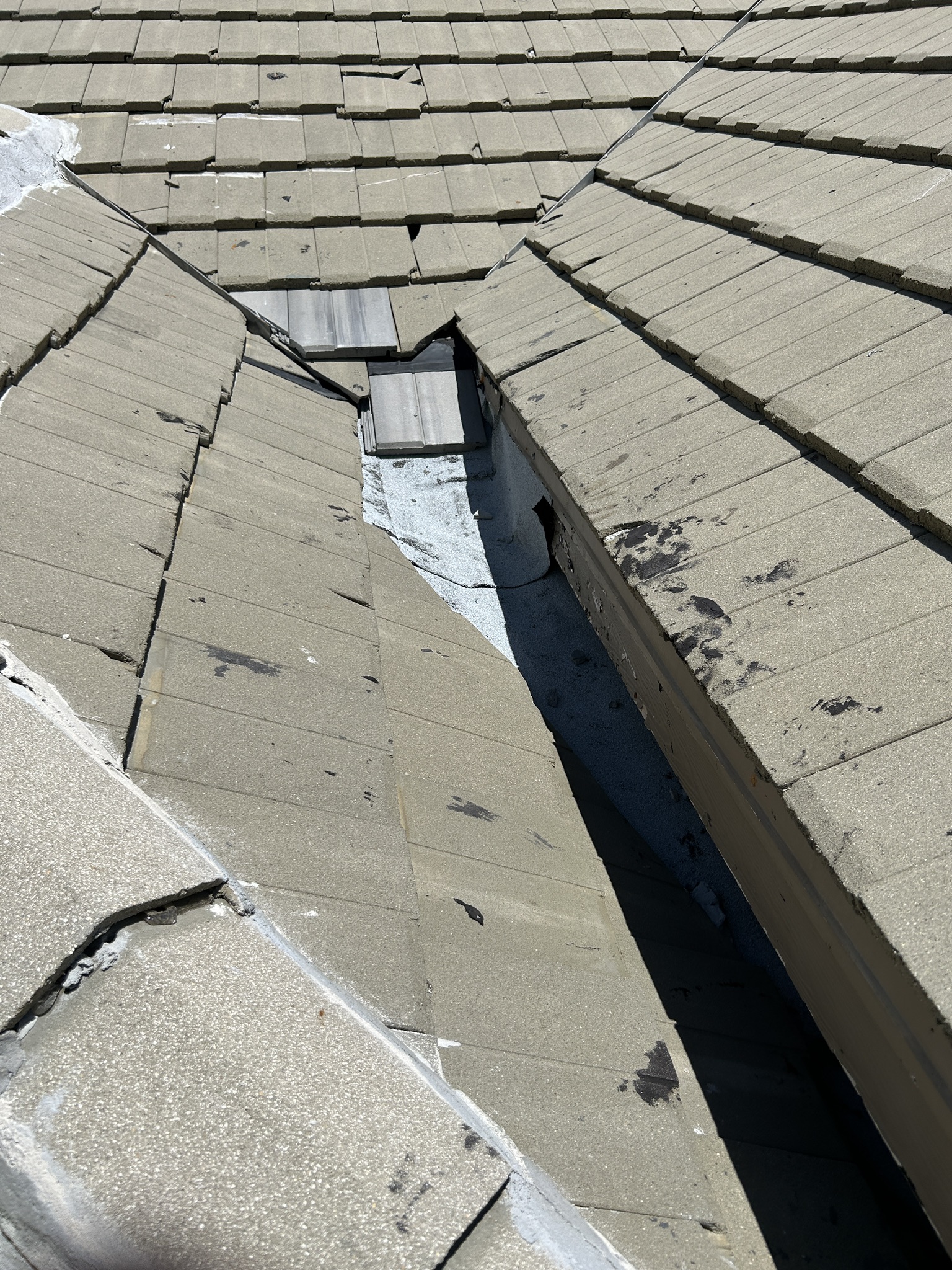
When our Fort Myers crew showed up at his place on Brantley Oaks Drive, the first thing we did was sit down and actually listen. After three failed repairs, Tristan didn't need another sales pitch — he needed someone to tell him the truth about what was going on up there.
Here's the short version of what a "dead valley" actually is: it's the spot where two roof slopes dump their water into a low, flat basin, or against a wall, instead of letting it drain away naturally. When you've got two valleys both funneling heavy tropical rain into that same low point, no amount of caulk on top of the tiles is going to hold. Florida sun breaks that stuff down fast, and the water volume just overwhelms it.
What we found was water sneaking in higher up the roof, traveling under the tiles along underlayment that had given out, and pooling right in that dead valley. Caulking the surface was never going to fix that — the real problem was underneath. The only real fix was to strip it down to the deck and rebuild the whole system properly.
What the Repair Actually Involved
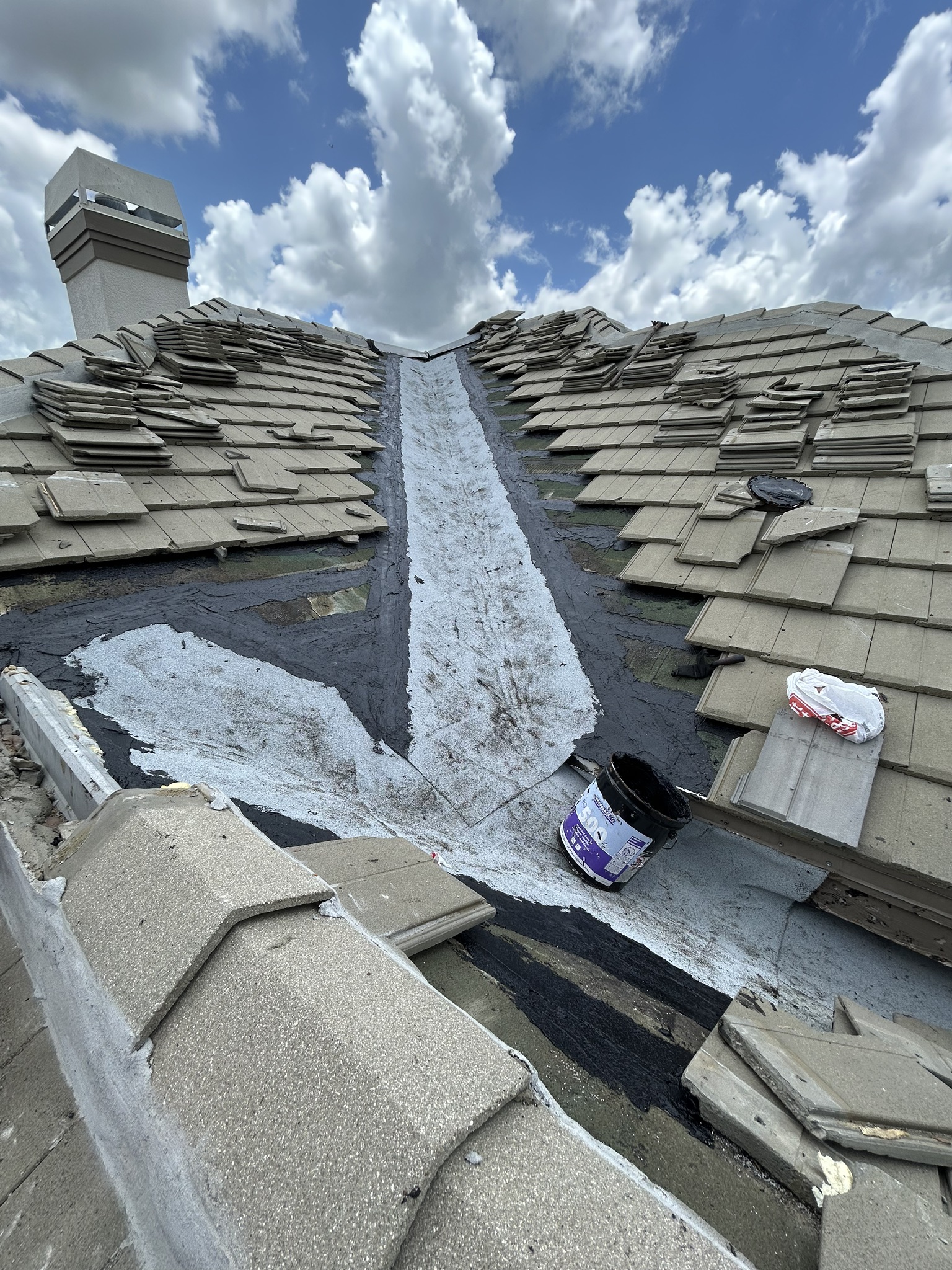
Instead of another patch job, we tore into both valleys feeding that dead valley and rebuilt them from scratch:
- Took it apart the right way. We pulled the field tiles, the rotted flashing, and the worn-out underlayment off both valleys so we could see exactly what we were working with, down to the bare deck.
- Went heavier on the underlayment and metal. We laid down commercial-grade, self-adhering waterproof underlayment built to handle Florida's heat swings, then topped it with heavy-gauge valley metal cut and fitted for a tight, watertight seal.
- Replaced the wall flashing too. The old flashing where the roof met the wall was in bad shape, so we tore it out and put in new, code-compliant metal to keep wind-driven rain from sneaking in behind the siding.
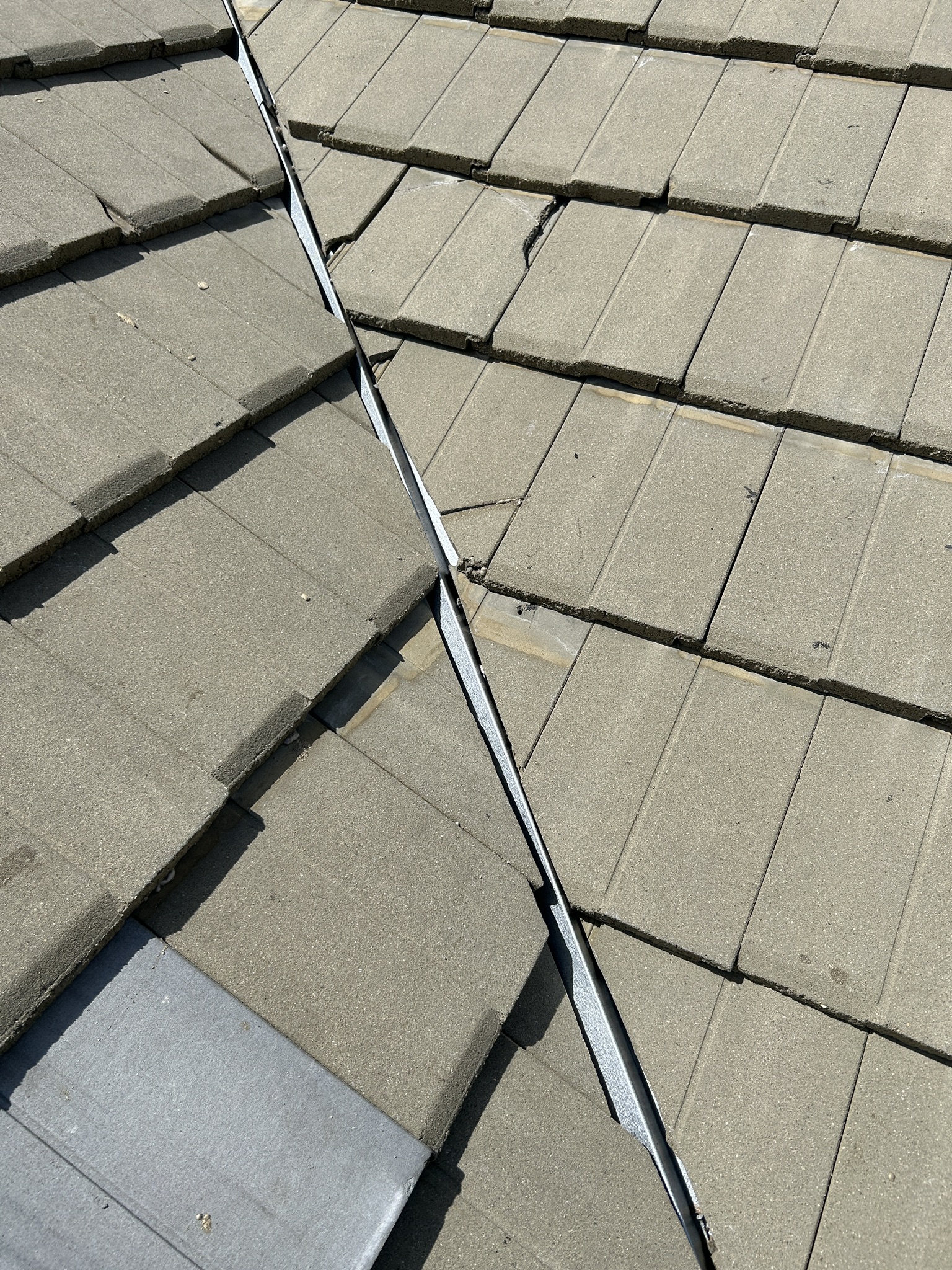
- Matched the tiles carefully. We kept the tiles that were still in good shape, cleaned off the old mortar and caulk, and tracked down replacement tiles that matched the color, texture, and profile of the originals so the roof still looks like it belongs on the house.
A Roof Tristan Can Finally Trust
Before we left, our crew ran a magnetic sweep to pick up any stray nails or debris, cleaned up the site, and went through the whole repair one more time to make sure every seam met Florida Building Code.
For Tristan, it was a relief he'd been waiting months for. After three contractors and three failed fixes, his home finally has a roof that can stand up to whatever the Gulf throws at it. That's really what we're after with every job — take the time to find the actual problem, and fix it right so nobody has to call us back about the same leak next summer.
Frequently Asked Questions
Why do "dead valleys" on tile roofs leak so often?
A dead valley collects runoff from more than one roof slope but doesn't have much pitch to drain it away quickly. During a hard Florida rain, water can back up underneath the tiles. If the waterproof membrane or flashing underneath is installed wrong, worn down by the heat, or just covered over with caulk, that water is going to find its way into your attic and ceiling.
Do you have to replace the whole tile roof to fix a leaking valley?
Not usually. As long as the rest of the roof's tiles and underlayment are still in good shape, we can do a targeted valley rebuild — pull the tiles on that section, strip out the damaged underlayment, put in new flashing and waterproof membrane, then reset the tiles. It's a lot less than a full reroof, both in cost and disruption.
How do you match tiles on an older roof?
Tile styles, sizes, and colors change over the years, so it takes some digging. We cross-reference manufacturers and profile types — flat, S-tile, barrel, whatever you have — and pull from reclaimed stock or closely matched modern tiles. If there's any slight color difference, we place those tiles somewhere less visible so your roof still looks uniform from the street.
Why didn't caulk or roofing cement fix the leak the first few times?
Caulk and roofing cement are meant to be short-term fixes. Florida's sun and heat dry them out, and they shrink and crack pretty quickly after that. The tiles themselves are really just the outer shield — the actual waterproofing happens at the underlayment and flashing underneath. Piling sealant on top of the tiles just traps water and debris instead of solving the leak underneath.
What does a proper roof-to-wall flashing job look like?
It comes down to metal flashing — stepped or continuous — tucked in behind the siding or stucco and layered over a sealed water barrier underneath. Done right, that overlap lets gravity do its job, sending rain down into the valley instead of letting it slip in behind the wall.
Visit our main Florida page
Visit our Fort Myers page
Location Information
- Address: 12701 Metro Pkwy B, Fort Myers, FL 33966
- Local Phone: (239) 426-8928
- Office Hours: Monday - Friday: 8am - 5pm • Closed Sat & Sun