
Restoring Commercial Integrity
PBR Metal Roof and Coping Repair for Summit Fire & Security in Fort Myers
Crystal Commerce Loop in South Fort Myers is a busy industrial and warehouse corridor, and for a company like Summit Fire & Security, an interior leak isn't just inconvenient — it can put specialized inventory, dispatch systems, and daily operations at risk. So when high winds and storm debris tore into the south side of their facility at 12320 Crystal Commerce Loop, building owner Fortune Development of SWFL called McKinnis Roofing & Sheet Metal to get it fixed the right way.
Property manager John Schaller needed a plan that would stop the water intrusion, deal with the corrosion that had already started, and restore the building's exterior — without the cost or downtime of reroofing the entire facility.
What We Found: Impact Damage, Rust, and Failing Edges
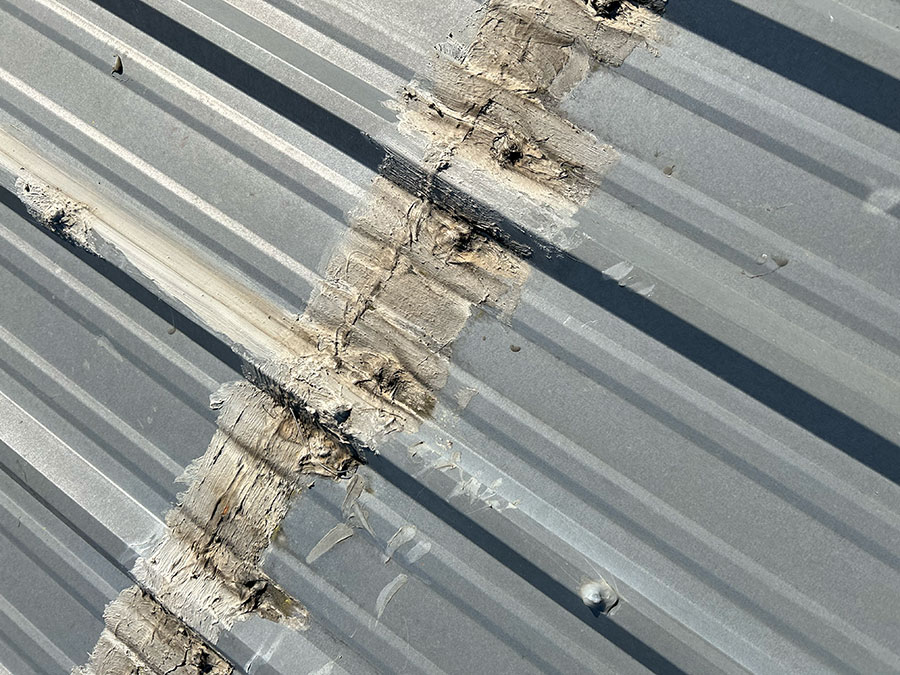
When our commercial team got out there and looked things over, we found clear, localized damage along the south side of the metal building. Wind and flying debris had struck the roof hard enough to crease and warp about 120 linear feet of the exposed-fastener PBR Galvalume panels.
That impact had broken the factory seal along the overlapping sidelaps and bent the ribs, which opened up a path straight in for wind-driven rain. Water had already gotten underneath the metal and soaked into the fiberglass batting insulation below. Left alone in Florida's heat and humidity, wet insulation like that speeds up corrosion on the underside of the metal fast. We also found surface rust starting to spread around the fastener holes, and the parapet coping around the perimeter was loose and bent, no longer doing its job of keeping water off the wall edge.
Fixing What Was Damaged, Reinforcing What Wasn't
Instead of pushing for a full replacement the building didn't need, we put together a focused repair plan to deal with the damaged sections, treat the corrosion, and shore up the building's perimeter.
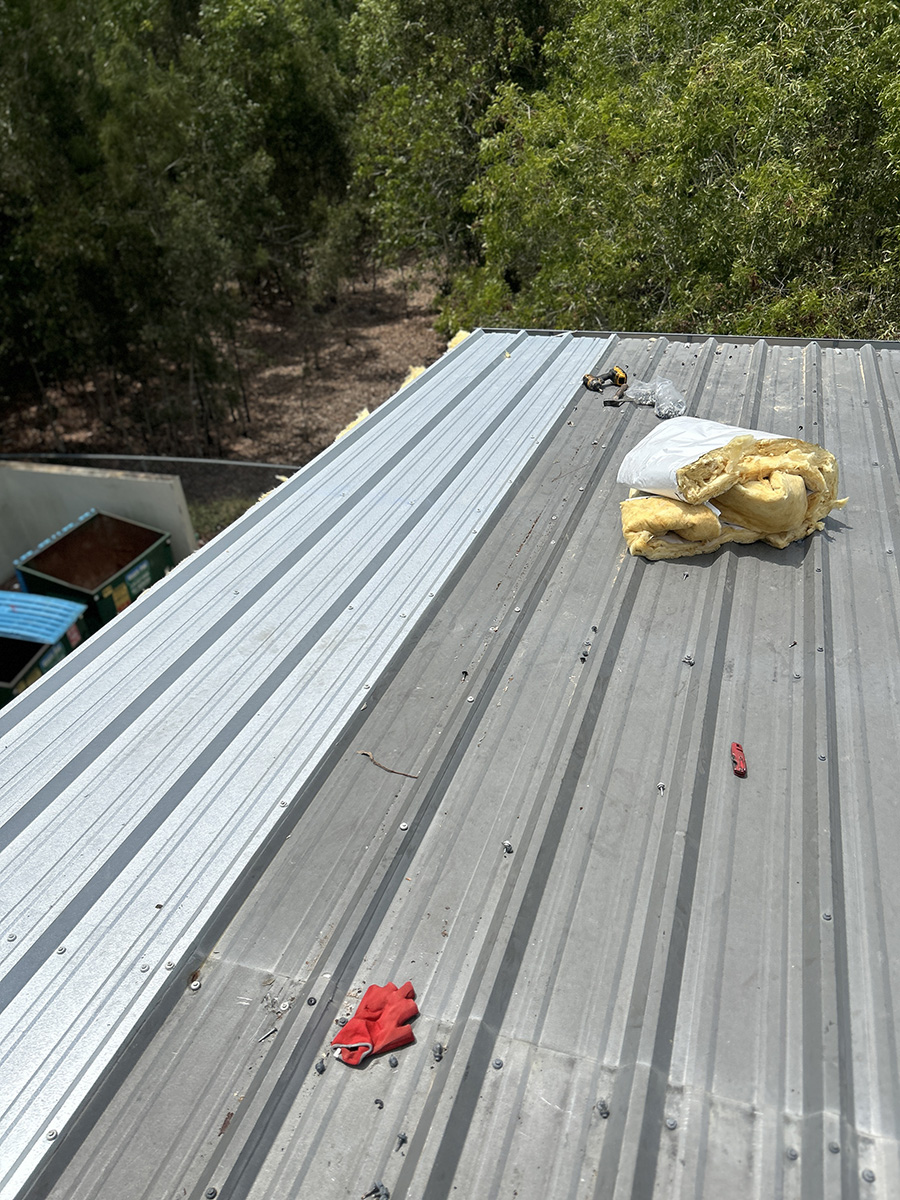
- Removed the damaged panels and insulation. We took off roughly 120 linear feet of bent, compromised PBR panels, checked the purlins underneath to make sure they were sound, and pulled out the wet, compacted fiberglass batting. New high-efficiency rolled batting went in to restore the thermal barrier and vapor seal.
- Treated the rust before it spread further. Before any new steel went up, we cleaned the active rust off the surrounding panels, mechanically removed the scale, and sealed everything with a rust-inhibiting primer and protective topcoat to stop the corrosion from continuing to eat into the metal.
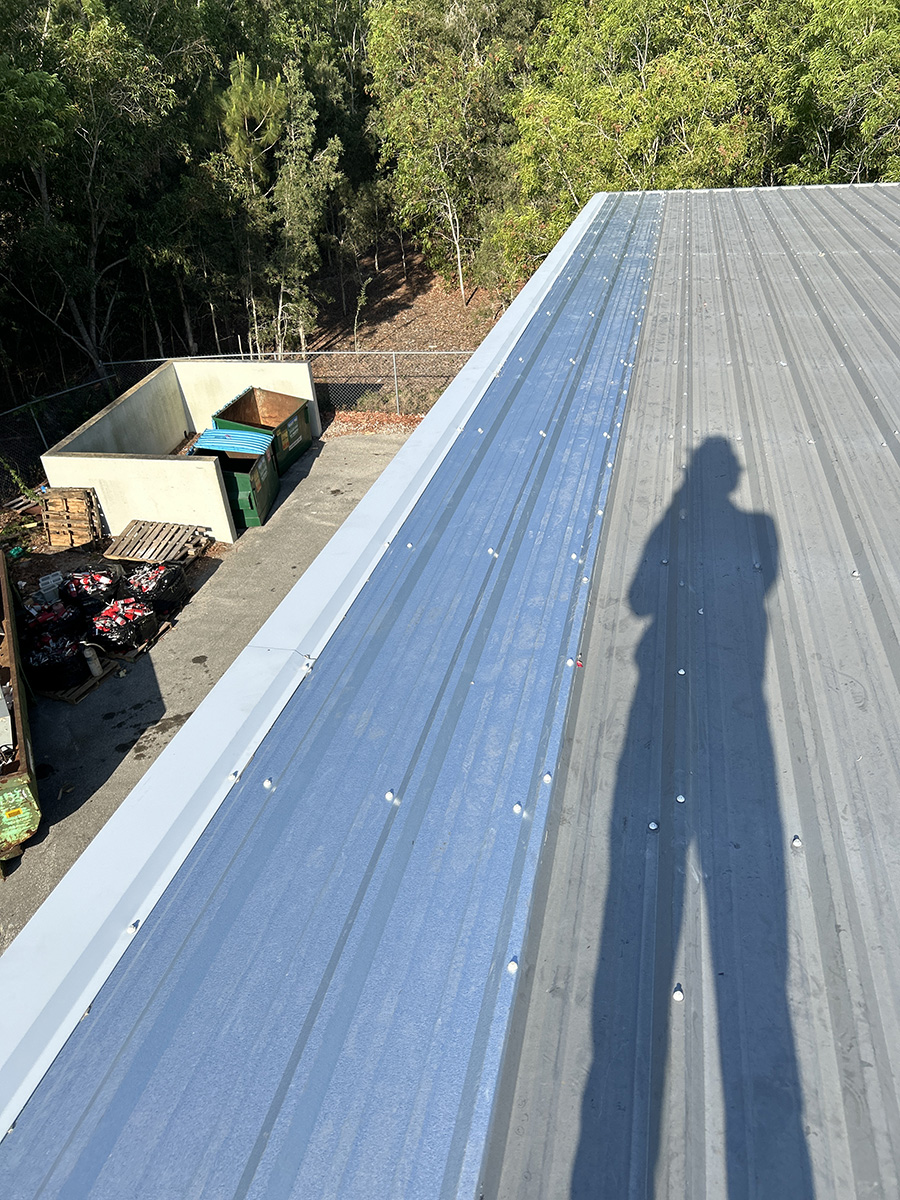
- Installed new heavy-duty panels. We put in new 26-gauge PBR Galvalume panels with a 36-inch net profile and 12-inch rib spacing, lined up with the existing framing, sealed at every sidelap with continuous butyl tape, and fastened down with weather-rated, gasketed hardware.
- Replaced the parapet coping. Wind damage usually starts at an unsecured edge, so we didn't skip this part. Our sheet metal shop custom-bent new heavy-gauge coping, and we pulled off the old, failed metal and installed the new cap to meet Florida's wind uplift code.
Ready for the Next Storm
Once the repair was finished, we ran a full inspection, cleaned up the site, and water-tested every new seam before calling it done. The Summit Fire & Security building is now backed by our 2-year McKinnis workmanship warranty along with the manufacturer's material coverage. We also recommended a twice-a-year maintenance check on that section going forward, just to keep an eye on things and catch anything small before it becomes a bigger problem.
Frequently Asked Questions
What are PBR metal panels, and why do you see them so often on Fort Myers commercial buildings?
PBR stands for Purlin Bearing Rib. Unlike a standard R-panel, PBR panels have an extra horizontal leg that rests right on the building's structural purlins, giving them more support so they don't sag when the fasteners get tightened down. Between their strength, wide 36-inch coverage, and how well they handle wind loads, PBR panels are a go-to choice for warehouses and pre-engineered metal buildings across Southwest Florida.
Why does wet fiberglass insulation need to be replaced during a metal roof repair?
Once wind-driven rain gets past the panel seams, it soaks straight into the fiberglass insulation sitting between the purlins and the roof skin. That wet insulation holds moisture right up against the underside of the metal like a sponge. In Florida's heat, that leads pretty quickly to rust, mold, and worse indoor air quality. Pulling out the wet batting and putting in new insulation is really the only way to protect the structural steel underneath.
Can surface rust on Galvalume panels be treated instead of replacing the whole panel?
Yes, as long as the rust is still surface-level and hasn't eaten through or pitted the metal underneath. If it's caught early, we can mechanically clean the rust off, apply a rust-inhibiting primer, and seal it with a durable protective coating. If the rust has already compromised the structural integrity of the panel, though, it needs to be cut out and replaced.
Why does replacing the parapet coping matter so much?
Parapet coping is really the first thing standing between your building and hurricane-force wind uplift. When wind hits the wall of a building, it accelerates upward and creates intense suction right at the roof edge. If the coping is bent or loose, that wind can peel it right off, which exposes the wall cavity and lets wind get underneath the roof panels too. Replacing damaged coping keeps that whole edge assembly up to code and able to handle those forces.
How often should a commercial metal roof in Southwest Florida get checked?
Ideally, twice a year — once in late spring before hurricane season really ramps up, and again in late fall after the summer thunderstorms have passed. Those two checkpoints catch things like loosened fasteners, sealant that's broken down from UV exposure, clogged drainage, or early rust around rooftop equipment, before any of it turns into an actual leak.
Visit our main Florida page
Visit our Fort Myers page
Location Information
- Address: 12701 Metro Pkwy B, Fort Myers, FL 33966
- Local Phone: (239) 426-8928
- Office Hours: Monday - Friday: 8am - 5pm • Closed Sat & Sun