
Stopping Ponding Leaks
Commercial TPO and Parapet Restoration for Habitat for Humanity in North Fort Myers
A non-profit like Habitat for Humanity can't afford to deal with the disruption, damage, or safety risks that come with a chronic roof leak. Their facility at 1288 North Tamiami Trail in North Fort Myers is a busy hub for local families, volunteers, and staff, and when water started making its way into the building, Javier Rueda, property management coordinator with Universal Solutions SWFL LLC, called McKinnis Roofing & Sheet Metal to get it solved for good.
Rather than pushing for a full reroof that would have been both disruptive and expensive, our commercial team ran a targeted diagnostic to find out exactly what was going wrong: severe ponding water on a low-slope section of the roof, combined with worn-out parapet wall coping.
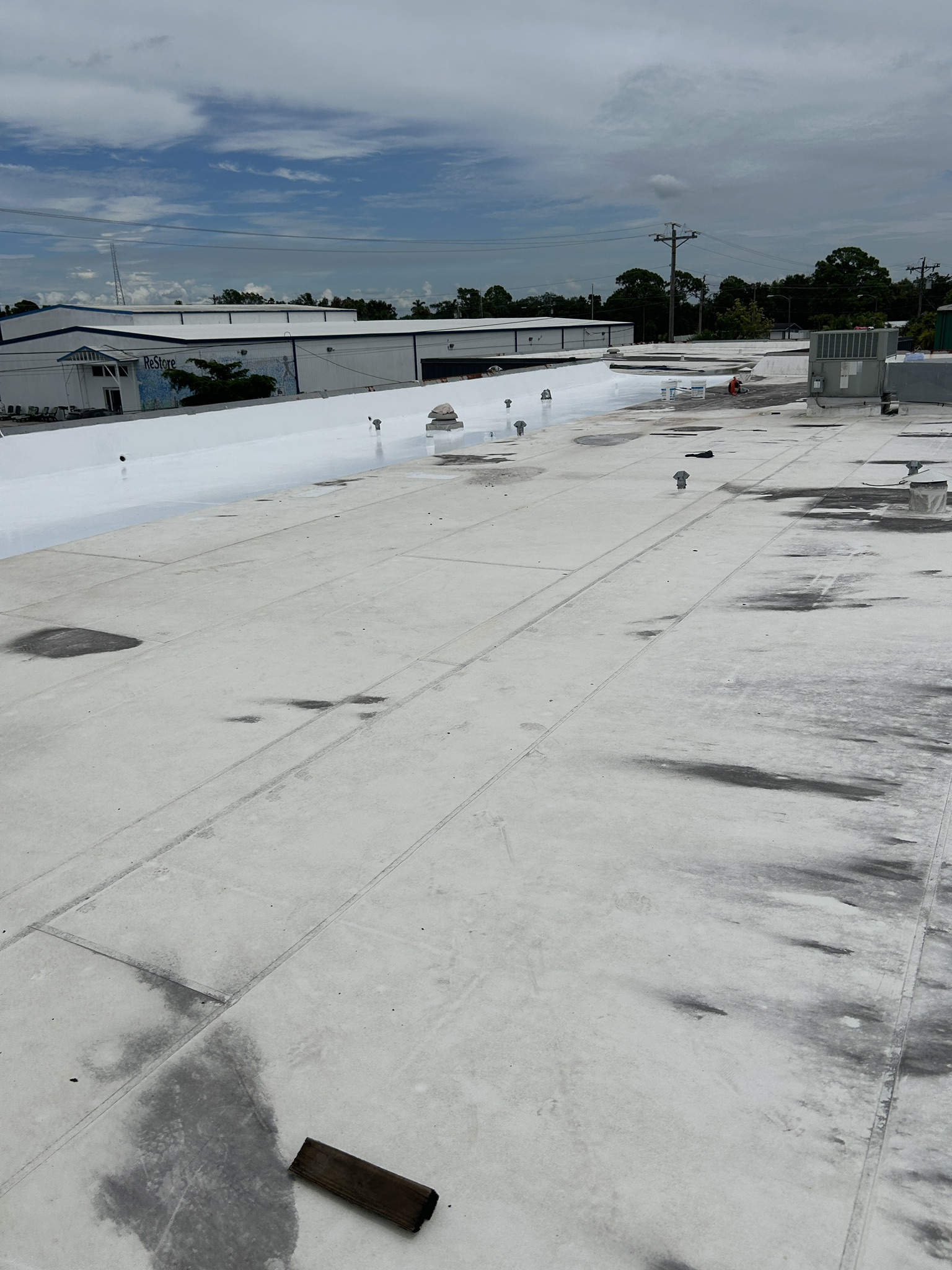
What We Found: A Sunken Basin and Failing Coping
During our inspection along the North Tamiami Trail corridor, we found several active leak areas clustered under a large low section of the flat roof. Flat roofs in Southwest Florida settle over time — it's just what happens under this kind of heat and sun. On this particular TPO roof, that settling had created a sunken basin where thousands of pounds of rainwater were pooling after every summer storm.
Since that water had no clear way to reach the existing drains, it sat there for days at a time. Between the constant weight and the UV exposure magnifying through the standing water, the aged membrane seams eventually broke down. On top of that, about 100 linear feet of the galvanized coping along the parapet wall had deteriorated, which let wind-driven rain slip past the wall cap and travel straight down into the ceiling below.
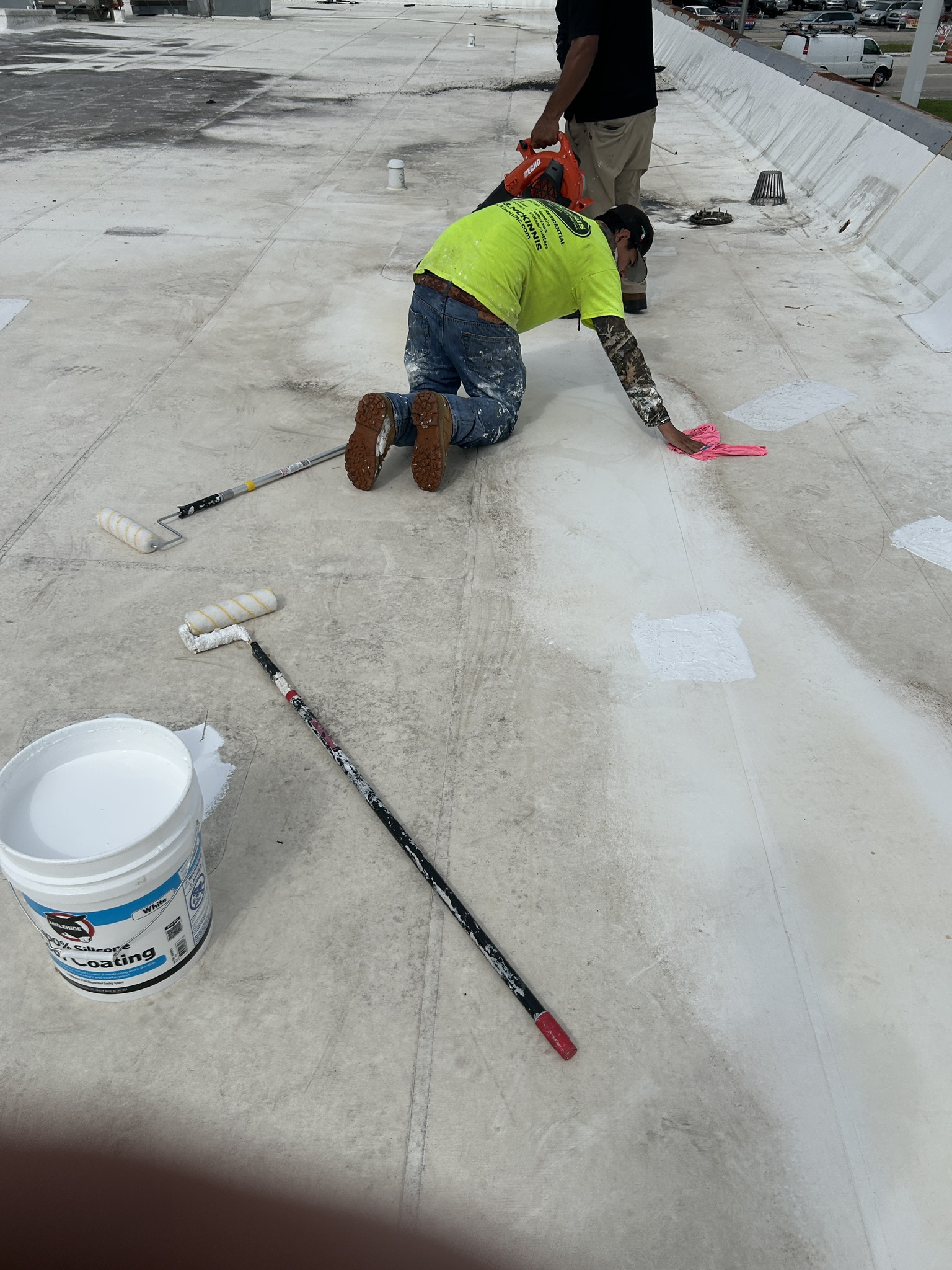
Fixing the Source, Not Just the Symptom
To solve this permanently, our team worked through a multi-phase plan built to eliminate the standing water and protect the whole roof perimeter going forward.
- Cleaned and prepped the membrane. We pumped out all the standing water and cleared away the silt and biological growth that had built up. TPO develops an oxidized film as it ages, so we scrubbed the membrane with industrial TPO solvent cleaner and followed up with a TPO-compatible primer, so the new material would actually bond at a molecular level instead of just sitting on top.
- Installed a real drain. To make sure water never pools in that spot again, we cut into the deck at the lowest point of the basin and installed a heavy-duty, TPO-compatible commercial roof drain. It's a gravity-fed outlet that gives the roof somewhere for water to actually go during a heavy storm. (The interior plumbing tie-in was handled by the owner's licensed plumber.)
- Rebuilt the membrane over the whole area. We heat-welded a new commercial-grade TPO membrane across the entire affected basin, fusing it directly to the primed surface and the new drain's clamping ring, so the whole section became one continuous, watertight pan.
- Wrapped the parapet wall. We extended the new TPO membrane up the inside face of the parapet wall and over the top plate, giving the whole wall a continuous, second layer of waterproofing.
- Replaced the coping. Back at our sheet metal shop, we custom-fabricated 100 linear feet of galvanized coping metal, then stripped off the old, worn coping and installed the new cap across the parapet edge, fastened to meet Florida Building Code wind uplift standards.
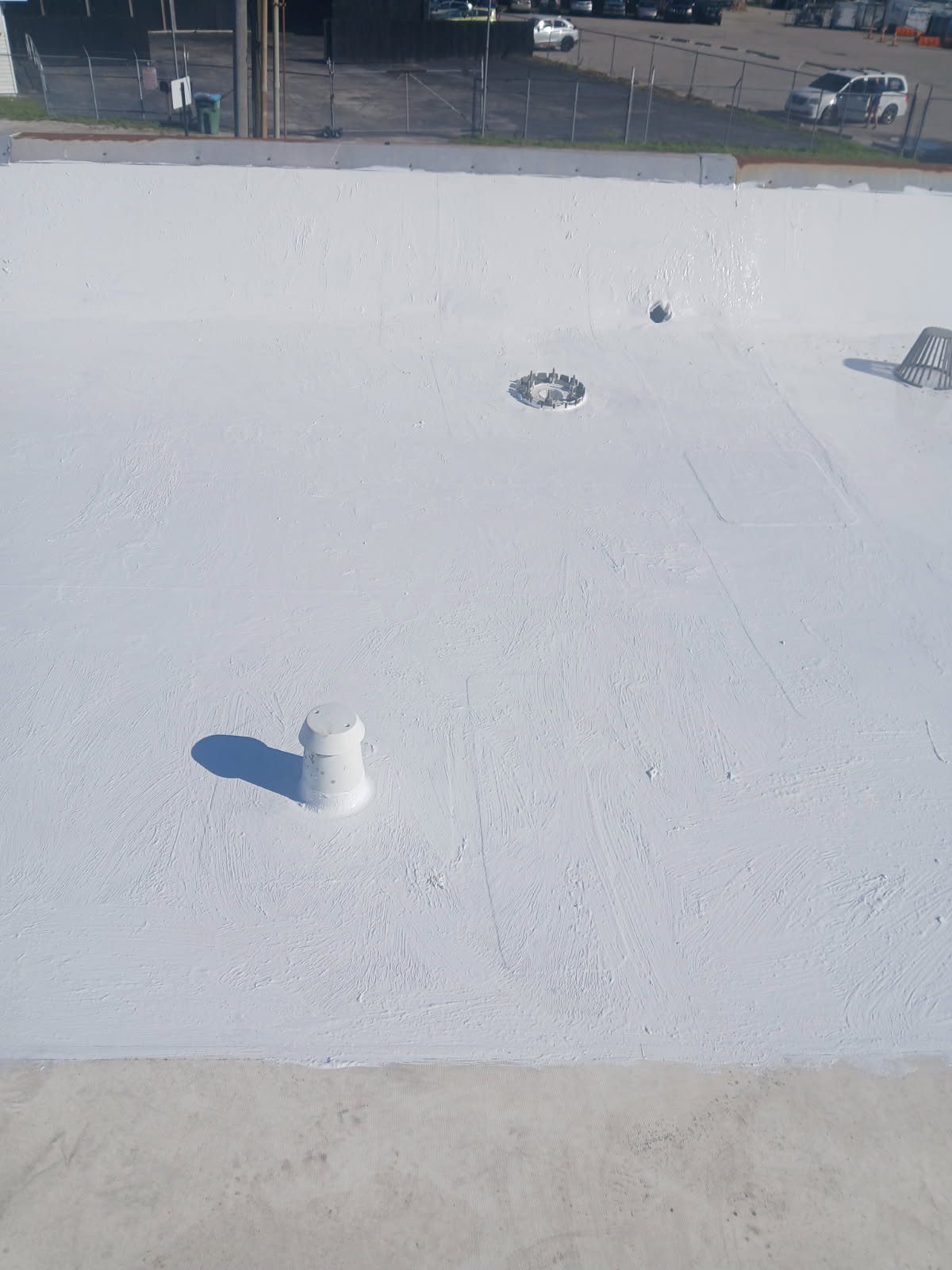
Protecting a Facility That Matters
Once the repair was done, we ran a full inspection, water-tested the new drain pan, and cleared every bit of debris from the site before calling it complete. By solving the actual drainage problem instead of just patching over it, we gave Habitat for Humanity a repair that's built to last, not one that would need attention again after the next storm season.
Frequently Asked Questions
Why does standing water cause leaks on a TPO roof?
TPO membranes are built to resist moisture, but water that sits on a flat roof for more than about 48 hours creates real problems. Standing water acts almost like a magnifying glass for Florida's UV rays, speeding up wear along the heat-welded seams. It's also heavy — roughly 5.2 pounds per square foot for every inch of depth — and that weight causes the deck to flex, which puts stress on the seams until water eventually finds its way through.
How do you bond new TPO to an older, existing roof?
You can't just heat-weld new TPO directly onto old, weathered membrane — it won't fuse properly. Years of sun exposure leave an oxidized layer on top along with built-up grime, so the surface has to be cleaned aggressively with solvent cleaner first to expose the base polymer underneath. After that, we apply a chemical primer and use hot-air welding equipment at the right temperature to get a true bond.
Why wrap the TPO membrane up and over the parapet wall?
Parapet walls are one of the most common places water gets into a commercial building. If the membrane only comes partway up the wall, wind-driven rain can blow underneath the metal coping and run down behind it into the wall itself. Wrapping the membrane all the way up and over the top plate means that even if rain does get under the coping during a storm, it still hits a waterproof layer and drains away instead of soaking into the wall.
Why install a new drain instead of just patching the leak?
If a roof has a low spot from deck settling or a slope that was never quite right, a patch over the leak is only a temporary fix. The next storm will just send water right back to that same spot, and it'll start working on the edges of the patch. Putting a proper drain at the actual low point removes the problem at its source instead of fighting it every time it rains.
What does the coping metal on a parapet wall actually do?
Coping is the metal cap that runs along the top of a parapet wall, and it does two things: it sheds rainwater away from the wall structure underneath, and it clamps the roofing membrane down along the edge. Florida Building Code requires that coping be custom-fitted and fastened to withstand the intense wind forces that build up at the corners and edges of a building during a tropical storm.
Visit our main Florida page
Visit our North Fort Myers page
Location Information
- Address: 12701 Metro Pkwy B, Fort Myers, FL 33966
- Local Phone: (239) 426-8928
- Office Hours: Monday - Friday: 8am - 5pm • Closed Sat & Sun