
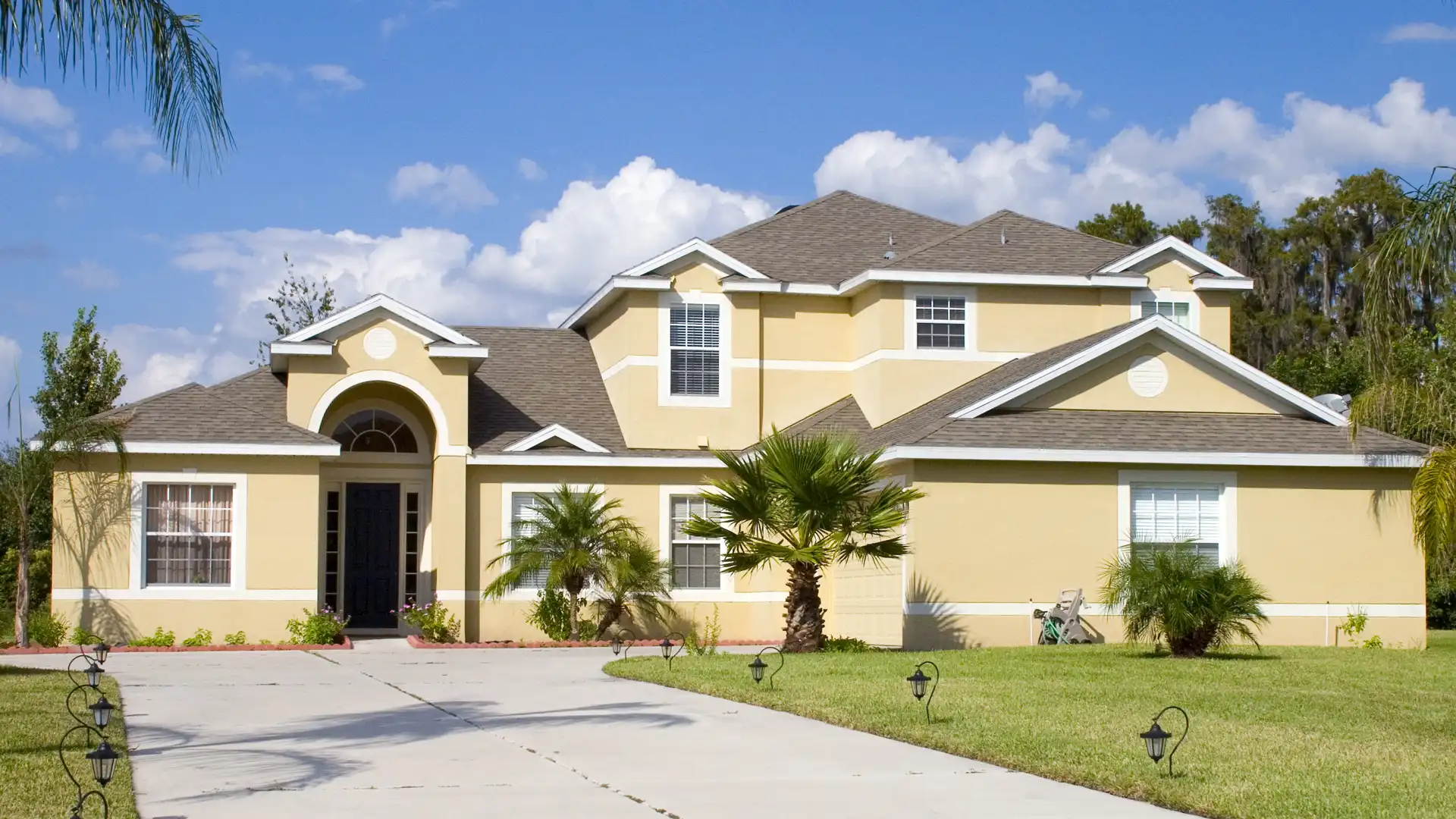
Roofing Contractors in Cape Coral, FL — Residential & Commercial
McKinnis Roofing & Sheet Metal delivers storm-hardened residential and commercial roofing systems engineered specifically for Cape Coral's canal-threaded coastal environment. Operating under Florida Certified Roofing Contractor license CCC1337309, our local Southwest Florida crews provide code-compliant roof replacements, preventative maintenance, emergency storm repairs, and architectural sheet metal fabrication across the Yacht Club, Pelican, Cape Harbour, Tarpon Point, Sandoval, Burnt Store, and throughout Lee County.
Cape Coral Permitting, 400+ Miles of Canals & Wind Uplift Standards
With over 400 miles of navigable saltwater and freshwater canals, Cape Coral presents unique structural wind exposure challenges. Properties adjacent to open waterways experience heightened wind shear and sustained pressure during tropical weather systems. McKinnis installs every roof in strict compliance with the Florida Building Code (FBC) and municipal requirements:
- Exposure Category C & D Wind Engineering (ASCE 7 & FBC Chapter 16): Because of extensive canal networks and proximity to Charlotte Harbor, Matlacha Pass, and the Caloosahatchee River, homes in Cape Coral are designated as Exposure Category C (and coastal Exposure D). Roofs must be engineered to resist ultimate design wind speeds ($V_{ult}$) between 150 and 160+ mph.
- City of Cape Coral EnerGov Permitting & Inspection Stages: All roofing permits are processed directly through the City of Cape Coral Development Services Department via the EnerGov portal. We handle all mandatory municipal inspection milestones:
- Substrate & Sheathing Inspection: Verifying replacement of rotted wood and 8d ring-shank nail patterns.
- Secondary Water Resistance (SWR) / In-Progress Inspection: Verifying code-approved underlayment adhesion and flashings.
- Final Building Inspection: Comprehensive sign-off for certificate of completion and insurance filings.
- Mandatory Notice of Commencement (NOC): In accordance with Florida law, we coordinate and file the recorded Notice of Commencement with the Lee County Clerk of Courts for all projects exceeding $5,000, ensuring your property is fully protected against contractor liens.
- Mandatory Secondary Water Barrier (FBC R908.7.2): All replacements require a sealed roof deck using self-adhering polymer-modified bitumen underlayment (peel-and-stick) or sealed-seam tape applied directly to the decking to prevent water intrusion if primary materials shift during severe storms.
Florida Property Insurance Statutes & Consumer Protections
Navigating property insurance regulations in Cape Coral requires working with a licensed contractor who adheres strictly to state statutes:
- Roof Age & Non-Renewal Protections (F.S. § 627.7011): Florida law prohibits insurance companies from refusing to write or renew a homeowner's policy solely due to roof age if the roof is under 15 years old. For roofs 15 years and older, carriers must allow homeowners to submit a certified inspection confirming at least 5 years of remaining useful life to prevent non-renewal.
- The Florida 25% Rule (F.S. § 553.844 & FBC Section 706): Homeowners are not always forced into an expensive total replacement for localized damage. If the existing roof was permitted and installed in compliance with the 2007 Florida Building Code or newer, code-compliant repairs are legally permitted on the damaged section, provided the remaining system is structurally sound.
- Prohibition of Assignment of Benefits (F.S. § 627.7152): Florida law bans post-loss Assignment of Benefits (AOB) agreements for property insurance claims. McKinnis works directly with you, providing detailed photographic evidence and itemized estimates so you retain total control over your claim and insurance funds.
- Strict Deductible Enforcement (F.S. § 817.234): It is a third-degree felony in Florida for any contractor to offer to pay, waive, absorb, or rebate a homeowner's insurance deductible.
- Uniform Wind Mitigation Credits (Form OIR-B1-1802): Installing a code-compliant roof featuring Secondary Water Resistance (SWR), ring-shank nailing, and impact-rated coverings provides the verification needed to lower annual property wind insurance premiums by 15% to 40%.
High-Performance Roofing Systems for Cape Coral Properties
- Standing Seam Architectural Metal: Heavy-gauge marine-grade aluminum and Galvalume systems featuring concealed clips that expand and contract without fastener fatigue, offering superior defense against canal salt-air corrosion and Category 5 wind speeds.
- Concrete & Clay Tile Roofing: Traditional barrel and flat contemporary tile profiles installed with Category 5 polyfoam adhesive systems that eliminate mechanical penetrations and lower cooling bills through high thermal mass.
- High-Wind Architectural Shingles: High-definition Class A fire-rated architectural shingles engineered with reinforced nail zones and algae-resistant copper granules to withstand intense Florida humidity.
- Synthetic Composite Slate & Shake: Impact-resistant polymer tiles replicating the appearance of natural slate or cedar shake without rot, algae staining, or water absorption.
- Commercial TPO & PVC Single-Ply: Energy-efficient, heat-welded white reflective membranes engineered for flat-roof commercial plazas, retail strips, and industrial facilities along Del Prado Boulevard and Pine Island Road (SR 78).
- Fluid-Applied Monolithic Roof Coatings: High-solids silicone coatings that seal leaks, restore aging low-slope commercial roofs, and extend service lifespans by 10 to 20 years without a complete tear-off.
Frequently Asked Questions
What wind load and exposure ratings are required for roofs in Cape Coral?
Because Cape Coral is located entirely within the Florida Wind-Borne Debris Region and features over 400 miles of open canals, residential and commercial structures must withstand ultimate design wind speeds ($V_{ult}$) between 150 and 160+ mph. Most canal-front properties are classified under Exposure Category C (or Exposure D along large open water bodies like the Caloosahatchee River and Charlotte Harbor), requiring enhanced 8d ring-shank structural deck nailing, Florida Product Approved assemblies, and sealed Secondary Water Barriers.
How does the City of Cape Coral manage roofing permits and mandatory inspections?
Roofing permits in Cape Coral are administered directly by the City of Cape Coral Development Services Department via the online EnerGov Citizen Self-Service (CSS) portal. The process requires submitting Florida Product Approval (FL) numbers, a recorded Notice of Commencement (NOC) filed with the Lee County Clerk of Courts, and passing three distinct municipal inspection phases: sheathing/deck re-nailing, secondary water resistance (SWR) underlayment dry-in, and final roof completion.
Can an insurance carrier drop my policy if my Cape Coral roof is 15 years old?
Under Florida Statute § 627.7011, insurance carriers cannot deny or non-renew coverage solely due to roof age for roofs under 15 years old. If your roof is 15 years or older, Florida law grants homeowners the right to have an authorized roofing contractor perform an inspection verifying that the roof has at least 5 years of remaining useful life. Submitting this certified inspection report protects your policy from age-based cancellation without requiring a forced replacement.
Which roofing material performs best for canal-front homes in Cape Coral?
Marine-grade aluminum standing seam metal and foam-set concrete or clay tiles provide the highest durability for canal-front and saltwater-adjacent homes. Aluminum contains no iron, eliminating rust and corrosion from brackish canal spray, while its concealed clip assembly accommodates intense thermal expansion. Concrete and clay tiles installed with Category 5 two-component polyfoam adhesives provide exceptional wind uplift resistance and natural thermal insulation without exposed screws.
Does the Florida 25% rule allow me to repair my storm-damaged roof rather than replace it in Cape Coral?
Yes. Under Florida Statute § 553.844 and FBC Section 706, the historical mandate requiring a total 100% reroof if more than 25% of a roof section is damaged does not apply to roofs permitted and built under the 2007 Florida Building Code or newer. If damage is isolated, homeowners and property managers can obtain a permit through the City of Cape Coral to perform code-compliant sectional repairs, provided the remainder of the roof assembly remains watertight and structurally sound.


