
Restoring Coastal Durability
Commercial Siding Repair at the Captiva Island Post Office
Captiva Island is renowned for its pristine beaches, turquoise waters, and laid-back Gulf Coast charm. Operating a commercial facility in this barrier island environment, however, comes with a demanding set of structural realities. Relentless ultraviolet radiation, corrosive salt air, and heavy tropical storms constantly test every exterior building envelope.
When Courtney Enterprises Inc. noticed visible warping and exterior deterioration on the historic Captiva Island Post Office property at 14812 Captiva Drive, they contacted McKinnis Roofing & Sheet Metal. As a central community hub serving island residents and visitors alike, the facility required a targeted, high-performance exterior repair that would restore moisture defense, enhance curb appeal, and stand up to coastal weather.
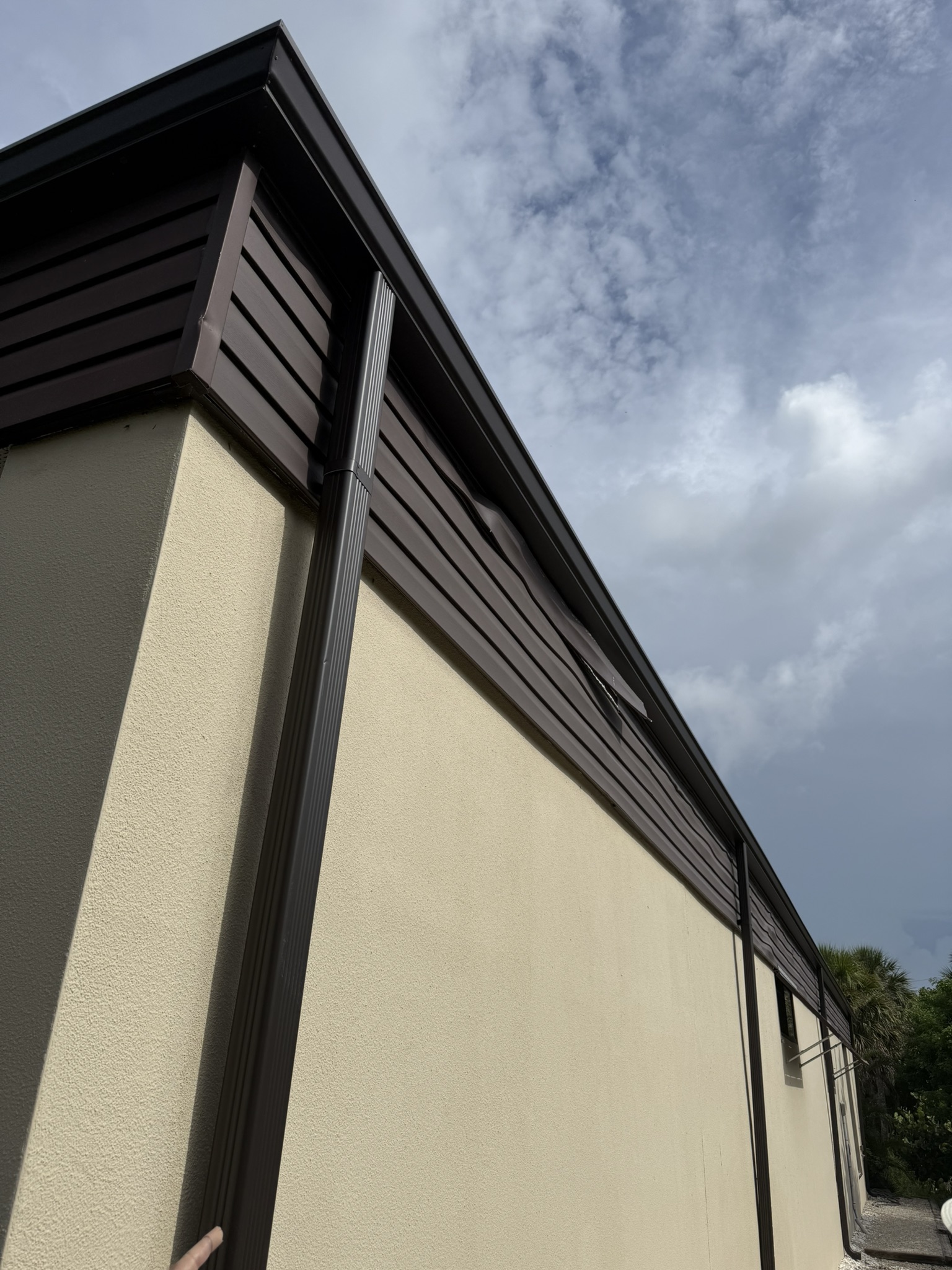
of the Post office building on Captiva Island
Diagnosing the Problem: Mixed Materials and Island Heat
During our initial property assessment, our exterior specialists identified a specific issue along one key elevation of the building. While three elevations were clad in durable painted aluminum siding, this particular section featured vinyl siding across an area measuring approximately 78 linear feet by three courses high.
Under the intense Southwest Florida sun, thermal expansion and prolonged radiant heat had caused the lower vinyl runs to warp, buckle, and pull away from the wall plane. In a barrier island wind zone like Captiva, buckled siding is more than a cosmetic blemish—it creates open pathways for wind-driven rain to bypass the outer cladding and saturate the underlying wood substrate.
McKinnis believes in proactive communication and clear client expectations before demolition starts. Sanders Courtney and the team at Courtney Enterprises received a transparent scope of work upfront: we outlined how we would surgically replace the compromised vinyl runs, protect the building’s existing gutters without billing for unnecessary detach-and-reset charges, and source the closest possible profile match to the weathered aluminum siding on the adjacent walls.
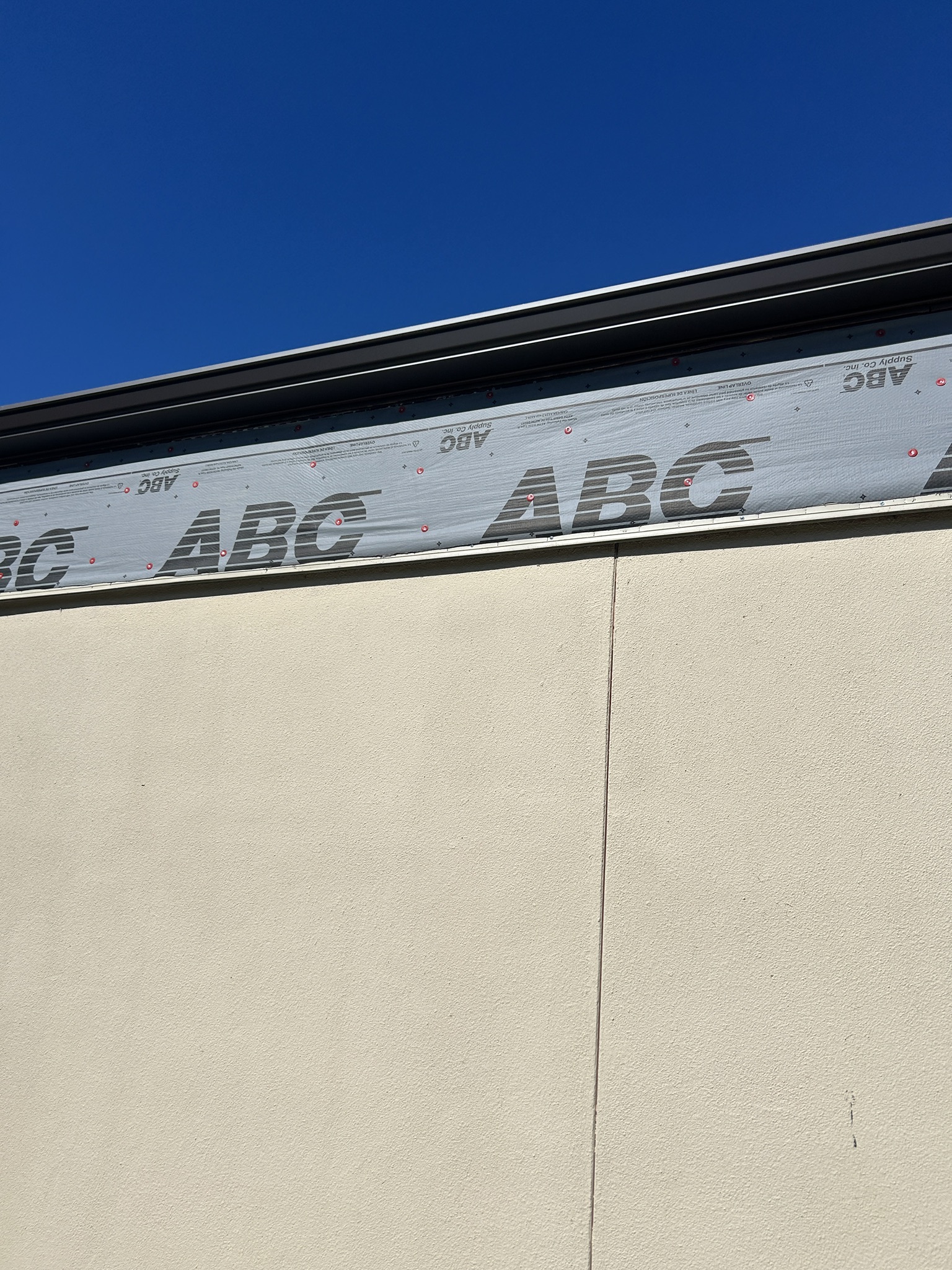
Surgical Tear-Off and Weather-Resistive Barrier Installation
Protecting an active commercial property requires precision and clean execution. Our crew began by carefully unfastening and removing the warped vinyl panels across the 78-linear-foot run, taking care to preserve the surrounding aluminum trim and existing gutter runs overhead. All discarded materials were collected and hauled away for proper disposal in accordance with local barrier island environmental guidelines.
Once down to the bare exterior sheathing, our technicians inspected the substrate for moisture intrusion. We then installed a commercial-grade, high-performance moisture barrier over the exposed sheathing. The barrier was meticulously lapped, taped, and secured to create a continuous Secondary Water Barrier (SWR). This critical layer guarantees that even if extreme winds drive moisture past the siding weep holes, water cannot reach the building’s internal structural framing.
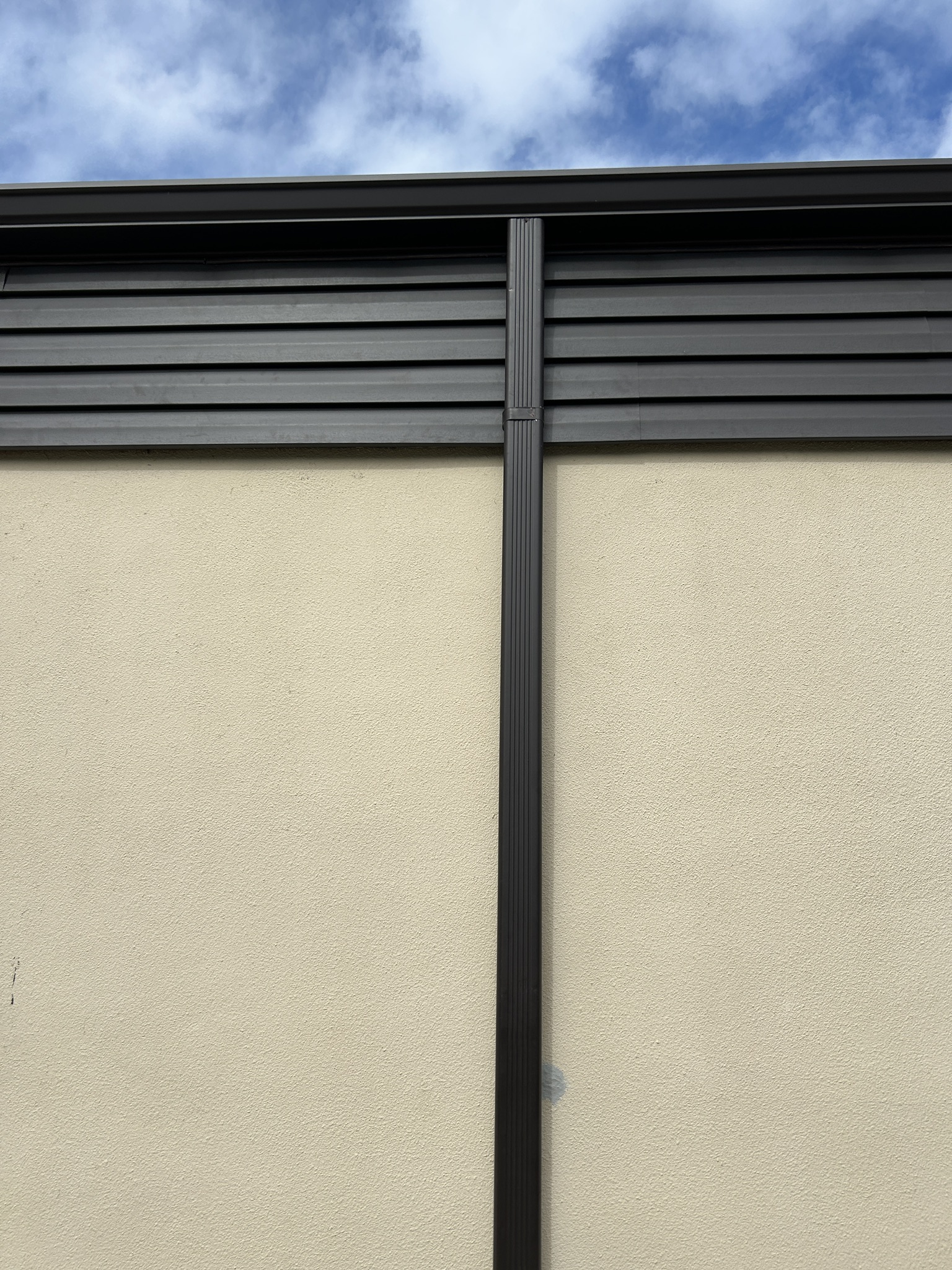
Precision Installation: Double 5-Inch Dutch Lap Siding
To restore the elevation, we furnished and installed new double 5-inch Dutch lap siding engineered for high-wind coastal environments. Vinyl siding on barrier islands requires specialized fastening techniques: panels must be hung loose enough in the center of the nailing slots to allow the material to freely expand and contract through extreme daily temperature swings without buckling or distorting.
Our technicians integrated custom-formed corner trims and flashings to tie the new Dutch lap panels cleanly into the existing building trim. While sun exposure and salt spray naturally weather existing aluminum over time, our team selected the closest color and sheen profile available, delivering a crisp, uniform appearance across the entire storefront elevation.
Following a detailed site cleanup and magnetic nail sweep, the Captiva Post Office exterior was returned to service—tight, weather-sealed, and ready for hurricane season.
Frequently Asked Questions
Why did the vinyl siding warp on this elevation while the aluminum siding did not?
Vinyl and aluminum react differently to Southwest Florida’s intense heat. Aluminum has a very low coefficient of thermal expansion, meaning it retains its shape even when exposed to direct afternoon sun and radiant heat off asphalt. Vinyl naturally expands and contracts significantly as temperatures fluctuate. If vinyl siding is nailed too tightly, installed without sufficient gap clearance at trim transitions, or exposed to concentrated radiant heat, it cannot move freely and will bow or buckle.
How does proper installation prevent new vinyl siding from buckling in coastal Florida?
Proper installation relies on hanging the siding rather than pinning it tightly to the wall. Technicians center corrosion-resistant fasteners in the manufacturer's pre-punched nailing slots, leaving approximately a 1/32-inch gap between the fastener head and the siding vinyl. This allows the panels to glide smoothly along the fasteners as they expand during midday heat and contract during cooler night temperatures, preventing ripples and warping.
Why is a secondary moisture barrier essential behind commercial siding on Captiva Island?
Exterior siding is designed to act as a rain screen, not an airtight waterproof seal. During tropical storms and summer squalls, wind pressure pushes moisture behind siding laps and through weep holes. A properly lapped, sealed weather-resistive barrier (WRB) directly over the sheathing ensures that any water penetrating the cladding drains harmlessly downward to the base weep system without ever reaching the building's interior framing or insulation.
Can new vinyl siding be matched exactly to older existing aluminum siding?
While manufacturers produce profiles like double 5-inch Dutch lap that replicate classic aluminum contours, an exact 100% color and sheen match is impossible on older buildings. Years of exposure to subtropical ultraviolet rays, salt air, and airborne moisture naturally oxidizes and fades original siding finishes. A professional contractor sources the closest contemporary color match and places transitions at natural architectural breaks to create a seamless visual profile from the street.
Can a lower-elevation siding repair be completed without replacing the gutters?
Yes, provided the gutter runs are structurally sound and the repair is localized. In this scope, the damage was confined to three horizontal courses along the lower elevation well below the fascia line. By carefully working beneath the gutter apron and downspout transitions, our technicians avoided disturbing the overhead water management system, saving the client the substantial time and cost of an unnecessary gutter replacement.
Visit our main Florida page
Visit our Sanibel & Captiva Islands page
Location Information
- Address: 12701 Metro Pkwy B, Fort Myers, FL 33966
- Local Phone: (239) 426-8928
- Office Hours: Monday - Friday: 8am - 5pm • Closed Sat & Sun