
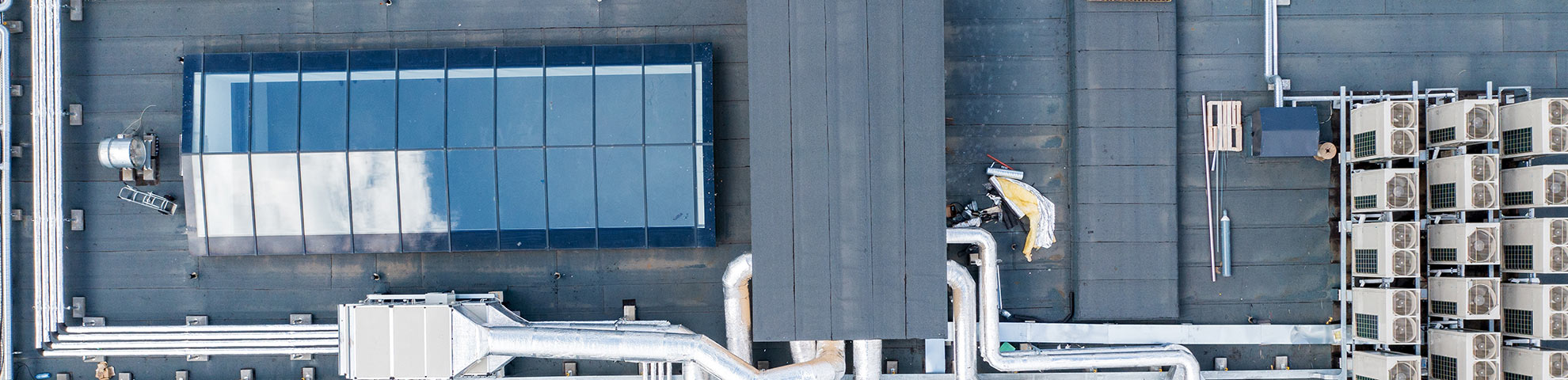
Commercial Roofing Contractors in North Fort Myers, FL
McKinnis Roofing & Sheet Metal delivers commercial, industrial, and multi-family roofing assemblies engineered to endure Southwest Florida’s intense tropical conditions. Operating locally under Florida Certified Roofing Contractor license CCC1337309, we provide complete commercial roof replacements, preventative maintenance, fluid-applied restoration coatings, and rapid storm repairs for shopping centers, office complexes, medical facilities, industrial warehouses, and condominium communities across North Fort Myers, the US-41 commercial corridor, Bayshore Road (SR 78), Pondella Road, and throughout Lee County.
Commercial Building Codes, Wind Uplift & Riverfront Corridor Engineering
Commercial structures situated near the Caloosahatchee River and inland commercial zones face severe microclimate wind shear, rapid thermal shock, and intense monsoon-season rain loading. McKinnis installs every commercial system in strict compliance with current Florida Building Code (FBC) and ASCE 7 structural standards:
- High-Velocity Uplift Engineering (FBC Chapters 15 & 16): Commercial low-slope roof systems in North Fort Myers must be engineered to resist ultimate design wind speeds ($V_{ult}$) between 150 and 175 mph. We design zone-specific mechanical fastening and fully adhered adhesive matrices tailored to building height, corner pressures, and exposure classifications using Florida Product Approved (FL) assemblies tested to TAS 114, FM 4470, and UL 1897 standards.
- Mandatory ANSI/SPRI ES-1 Edge Metal (FBC Section 1504.5): Over 70% of commercial roof failures originate at the perimeter. Our in-house architectural sheet metal shop fabricates custom commercial coping caps, gravel stops, and fascia systems certified to ANSI/SPRI/ES-1 pull-off standards to eliminate membrane peel-back during hurricane-force gusts.
- Commercial Energy Code & Minimum R-20 Insulation (C402.2.1): All commercial reroofs installed above the roof deck must achieve continuous thermal insulation (minimum R-20). We design custom tapered polyisocyanurate insulation layouts that eliminate standing water by ensuring a minimum ¼-inch per foot slope toward primary drains and secondary scuppers.
- Secondary Emergency Drainage (FBC Section 1503.4): Flat and low-slope commercial roofs must incorporate secondary overflow scuppers or internal emergency drains to prevent structural overload from sudden tropical deluge ponding.
Commercial Insurance Regulations, Condo SIRS Mandates & Asset Protection
Managing commercial property in Florida requires strict adherence to statewide property statutes and insurance reforms:
- Condo Structural Integrity Reserve Studies (SIRS - F.S. § 718.112): Florida condominium associations governing buildings three stories or higher are legally prohibited from waiving or reducing capital reserve funding for structural components, explicitly including the roof. McKinnis provides visual roof condition evaluations, remaining useful life verifications, core sampling, and replacement budgeting to keep HOA and condo boards fully compliant with state reserve laws.
- Milestone Structural Inspections (F.S. § 553.899): Multi-family and commercial properties reaching 30 years of age (or 25 years within coastal proximity) require formal milestone structural inspections. Our commercial roofing team documents substrate decking conditions, perimeter structural tie-ins, and waterproofing integrity to support engineering reports.
- The Florida 25% Reroofing Rule (F.S. § 553.844): If your commercial facility sustains localized storm or tree damage, a mandatory 100% reroof is not necessarily required. Under Florida statute, if the existing roof was permitted and installed under the 2007 Florida Building Code or later, property owners are permitted to execute code-compliant partial repairs, provided the remainder of the roof system remains watertight and structurally sound.
- Elimination of Assignment of Benefits (F.S. § 627.7152): Florida law bans post-loss Assignment of Benefits (AOB) on commercial and residential property insurance claims. McKinnis works directly with property owners, asset managers, and commercial adjusters, providing forensic damage assessments and transparent estimates while you retain complete control of insurance settlements.
Florida-Engineered Commercial Roofing Systems
- TPO (Thermoplastic Polyolefin) Single-Ply: Energy-efficient, heat-welded white membranes that reflect solar radiation, significantly lower commercial HVAC operating costs, and deliver watertight performance on large-scale retail and warehouse roofs.
- PVC (Polyvinyl Chloride) Single-Ply: Chemical-, grease-, and fire-resistant white single-ply membranes engineered specifically for restaurants, food processing plants, and commercial facilities with rooftop grease or chemical exhaust.
- Modified Bitumen Multi-Ply: Multi-layered SBS and APP polymer-modified asphalt assemblies installed via cold-applied adhesive or torch welding, delivering superior puncture resistance and redundant waterproofing for roofs with heavy foot traffic and service equipment.
- Fluid-Applied Restorative Roof Coatings: High-solids silicone and acrylic elastomeric coatings that restore aging commercial flat roofs, form a seamless monolithic membrane over seams and penetrations, and extend roof lifespan by 10 to 20 years without a costly tear-off.
- Architectural Standing Seam Metal: Heavy-gauge marine-grade aluminum and galvalume panels featuring concealed clips that accommodate thermal expansion while providing 160+ mph wind uplift resistance along riverfront commercial corridors.
- Commercial & Multi-Family Tile Roofing: Concrete and clay barrel and flat profile tile systems installed with Category 5 polyfoam adhesives to deliver architectural elegance and thermal mass for condominiums, resorts, and professional plazas.
- Commercial Architectural Shingle Systems: Heavy-duty, Class A fire-rated architectural shingles with copper-infused algae resistance designed for steep-slope offices, townhome communities, and multi-family facilities.
Local Commercial Project Case Studies:
Modified Bitumen Silicone Coating at Gulf Coast Orthodontics, Fort Myers
Commercial TPO and Parapet Restoration for Habitat for Humanity in North Fort Myers
PBR Metal Roof and Coping Repair for Summit Fire & Security in Fort Myers
Frequently Asked Questions
How do Florida Condo SIRS and milestone inspection laws affect North Fort Myers HOA and commercial roof reserves?
Under Florida Statute § 718.112, condominium and cooperative associations with buildings three stories or higher cannot waive or reduce reserve funding for the roof. Associations must maintain a fully funded replacement reserve based on a Structural Integrity Reserve Study (SIRS). Additionally, buildings reaching 30 years of age require Milestone Structural Inspections under F.S. § 553.899. McKinnis assists property managers and boards by performing comprehensive roof condition assessments, remaining useful life verifications, and capital replacement budgeting to ensure legal compliance.
When is a commercial fluid-applied roof coating approved over a complete tear-off in Lee County?
Under Florida Building Code Section 1511, a commercial building can receive a restorative fluid-applied roof coating (silicone or acrylic) if the facility currently has only one existing roof layer, the underlying insulation is confirmed dry via non-destructive infrared moisture scanning (wet insulation must be excised and replaced), and the substrate is structurally sound. Restorative coating systems seal leaks, extend service life by 10 to 20 years, qualify for 100% first-year tax deductions as operational maintenance, and avoid disruption to tenant operations below.
What wind uplift engineering is required for commercial low-slope roofs in North Fort Myers?
Commercial buildings in North Fort Myers must meet Florida Building Code wind load criteria based on ASCE 7, engineered for ultimate design wind speeds ($V_{ult}$) between 150 and 175 mph. Engineering calculations determine specific fastening densities or adhesive coverage across three distinct roof areas: Zone 1 (field), Zone 2 (perimeters), and Zone 3 (corners). McKinnis installs only Florida Product Approved assemblies with verified uplift test data to guarantee code compliance.
How does McKinnis ensure uninterrupted business operations and avoid water damage during commercial installations?
We execute commercial replacements in carefully phased sections based on daily weather and radar monitoring. Rather than exposing large roof areas at once, our installation crews tear off only what can be re-insulated and made 100% watertight within that specific work shift. Every active section is sealed with Florida-approved Secondary Water Resistance (SWR) underlayment or temporary tie-offs before end-of-day inspections, preventing interior water intrusion and allowing retail, office, and industrial facilities to remain fully operational.
Can our commercial property repair hurricane or wind damage instead of replacing the entire roof under Florida’s 25% rule?
Yes. Under Florida Statute § 553.844 and FBC Section 706, the historical mandate requiring an automatic 100% commercial reroof if more than 25% of the roof section is damaged does not apply if the existing roof was permitted and built in compliance with the 2007 Florida Building Code or newer. If damage is isolated, property owners are legally permitted to execute code-compliant repairs on damaged sections rather than funding a total reroof, provided the remainder of the assembly remains structurally sound. McKinnis provides forensic damage assessments to document repairability for commercial insurance adjusters.


